Mentorship as a Leadership Strategy in Commercial Real Estate | CREW DC
As National Mentorship Month concludes, CREW Washington DC is spotlighting a mentorship story that reflects a critical workforce reality: mentorship is not a professional courtesy—it is a leadership development strategy that directly influences career mobility, leadership readiness, and long-term industry engagement.
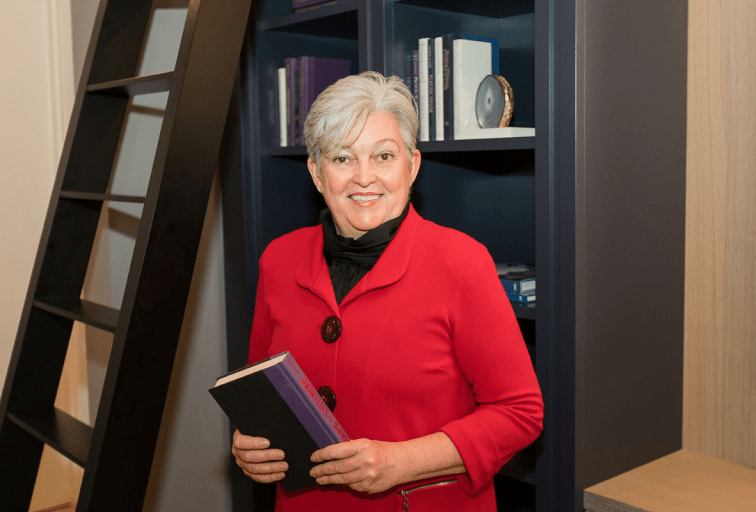
For Stephanie Duncan and Lesley Morrison, mentorship became a framework for navigating career transitions, expanding leadership capacity, and contributing meaningfully to CREW DC’s long-term success.
“Mentorship isn’t about giving someone a checklist,” Stephanie shared. “It’s about helping people evaluate risk and opportunity, so they can make decisions that serve their long-term goals—not just their next title.”
From Career Stagnation to Strategic Mobility
When Lesley first connected with Stephanie, she had built a strong operational foundation and was seeking to broaden her professional scope. Like many professionals attempting internal mobility, she was encouraged to take on additional responsibilities while waiting for a role change that never fully materialized.
Stephanie encouraged Lesley to evaluate whether staying in place was actually limiting her future options. In her experience, strong performers are often retained in roles where they deliver immediate value, even when leaders support their growth in principle.
“When someone becomes indispensable in an operational role, organizations don’t always move them—even when they want to,” Stephanie said. “In those cases, staying can limit growth.”
That perspective prompted Lesley to explore roles that could diversify her experience and reposition her long-term career trajectory, even if the opportunity did not immediately align with her expectations.
“I worried that accepting a non-traditional role in the industry meant I was taking a step backward,” Lesley said. “But gaining exposure to larger systems and more complex decision-making ultimately strengthened how my expertise was viewed and valued.”
Rather than optimizing for short-term optics, Stephanie encouraged Lesley to focus on long-term optionality and skill expansion. The move ultimately broadened Lesley’s responsibilities and opened doors beyond her previous career path.
Building Leadership Inside CREW DC
Their mentorship extended beyond individual career decisions and into shared leadership within CREW DC.
When Stephanie became Treasurer, she sought to reposition the Finance Committee as a strategic partner to the Board—focused on forecasting, scenario planning, and data-informed governance rather than transactional oversight. The goal was to strengthen the Board’s ability to evaluate growth opportunities and allocate resources strategically.
“I wanted financial and business analytics to inform decisions, not just confirm accuracy,” Stephanie said.
As leadership responsibilities evolved, Lesley had the opportunity to support her mentor’s work through committee leadership, contributing directly to governance improvements and operational continuity within the chapter.
“Mentorship isn’t just about receiving guidance,” Lesley said. “It’s also about showing up and contributing when your mentor is in a leadership role. That kind of partnership benefits our organization.”

Together, they benchmarked financial and governance practices against those of other CREW chapters and implemented improvements locally. Lesley later served as Finance/Governance Committee Chair and was encouraged to pursue a Board role as Treasurer—extending the leadership pipeline that began through mentorship.
Their collaboration continued as Stephanie transitioned into the Immediate Past President role and Lesley stepped into the Treasurer position, strengthening institutional knowledge and leadership continuity within the chapter.
Mentorship as Two-Way Leadership Development
While the relationship began as a mentor-mentee relationship, it evolved into a reciprocal leadership partnership.
During her presidency, Stephanie actively sought Lesley’s perspective as both a Board colleague and a representative of members navigating earlier career stages. That feedback informed governance decisions and helped ensure the chapter remained aligned with evolving member needs.
“Leadership doesn’t work if you only hear from people who have already ‘made it,’” Stephanie said. “Lesley helped ensure we were thinking about the full membership.”
From Lesley’s perspective, being included in leadership conversations reinforced CREW DC’s collaborative culture and strengthened her own leadership confidence.
“Being asked for my perspective showed me that leadership here isn’t hierarchical—it’s collective,” she said.
Retention Through Professional Community
Beyond professional advancement, both women emphasize another critical workforce outcome: retention through community.
Over time, their mentorship expanded to include personal challenges, including caregiving responsibilities and major life transitions. CREW DC provided a trusted professional environment where those realities could be acknowledged.
“CREW is one of the few professional spaces where you can talk about real life and still feel supported in your career,” Lesley said. “That support is why people stay engaged and step into leadership.”
For Stephanie, that trust is what converts participation into contribution.
“When people feel supported, they don’t just stay,” she said. “They lead.”

Creating the Next Generation of Mentors
Today, Lesley views mentorship not as a benefit she received, but as a responsibility she now carries forward.
“Mentorship is a selfless role,” she said. “You do it because someone invested in you and because the industry is stronger when we invest in each other.”
She is committed to mentoring others and continuing to strengthen leadership pathways within CREW DC.
“I want to help other women move forward the way Stephanie helped me,” she said.
Stephanie and Lesley’s experience reflects how mentorship directly supports outcomes that matter to employers, associations, and the broader commercial real estate ecosystem:
Career mobility across functions and sectors.
Leadership readiness and governance capacity.
Better decision-making through diverse perspectives.
Higher retention through professional community.
Sustainable leadership pipelines.
“If we want stronger leadership in commercial real estate, we have to be intentional about developing it,” Stephanie said. “Mentorship is one of the most effective ways to do that.”
As CREW DC closes out National Mentorship Month, this story reinforces the chapter’s role not only as a connector of professionals but as a catalyst for leadership development across the commercial real estate industry. And that impact is magnified by each mentorship pair.